
Why Lighting Should Be Planned Before Decorative Selections
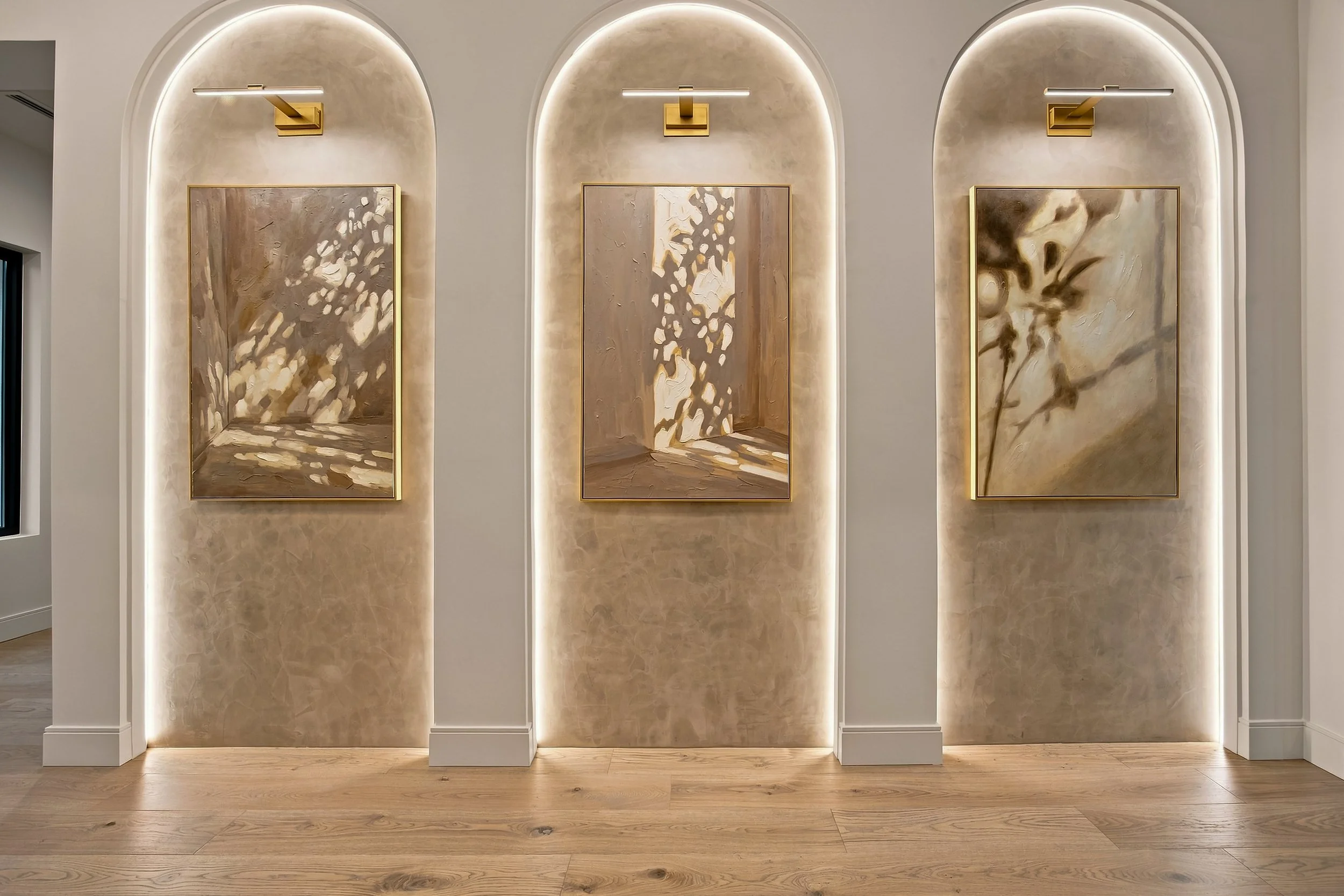
Concealed light traces the carved foyer arches at Sculpted Elegance. Photography by Beliz Photography.
A pendant can be chosen in an afternoon. The way light moves through a home takes more forethought. Ceiling forms, cabinetry, artwork and furniture all influence where light belongs—and many of those decisions become harder to change once construction is underway.
Planning lighting early gives decorative fixtures a clear role within the interior. It also makes room for the less visible details: a concealed channel that reveals a textured wall, a sconce placed at a useful height, or separate controls that let a room shift from morning to evening.
Begin with the Architecture
Before selecting chandeliers or pendants, study the floor plan and elevations. Consider ceiling heights, openings, furniture arrangements and the views between rooms. A fixture centered in an empty room may feel misplaced once the dining table or seating group is in position.
Recessed lighting deserves the same attention. An evenly spaced grid does not automatically account for cabinetry, beams or artwork. Locations should respond to what the room contains and how it will be used.
Give Each Layer a Purpose
Ambient light provides overall visibility. Task lighting supports activities such as cooking or reading. Accent lighting reveals texture, art and architectural detail. Decorative fixtures bring scale and character, sometimes contributing to more than one layer.
In a kitchen, under-cabinet lighting can illuminate the work surface while pendants establish the island’s presence. In a living room, a chandelier can give the seating area definition while lamps and architectural lighting provide a softer evening setting. A sculptural fixture does not have to carry every lighting need on its own.
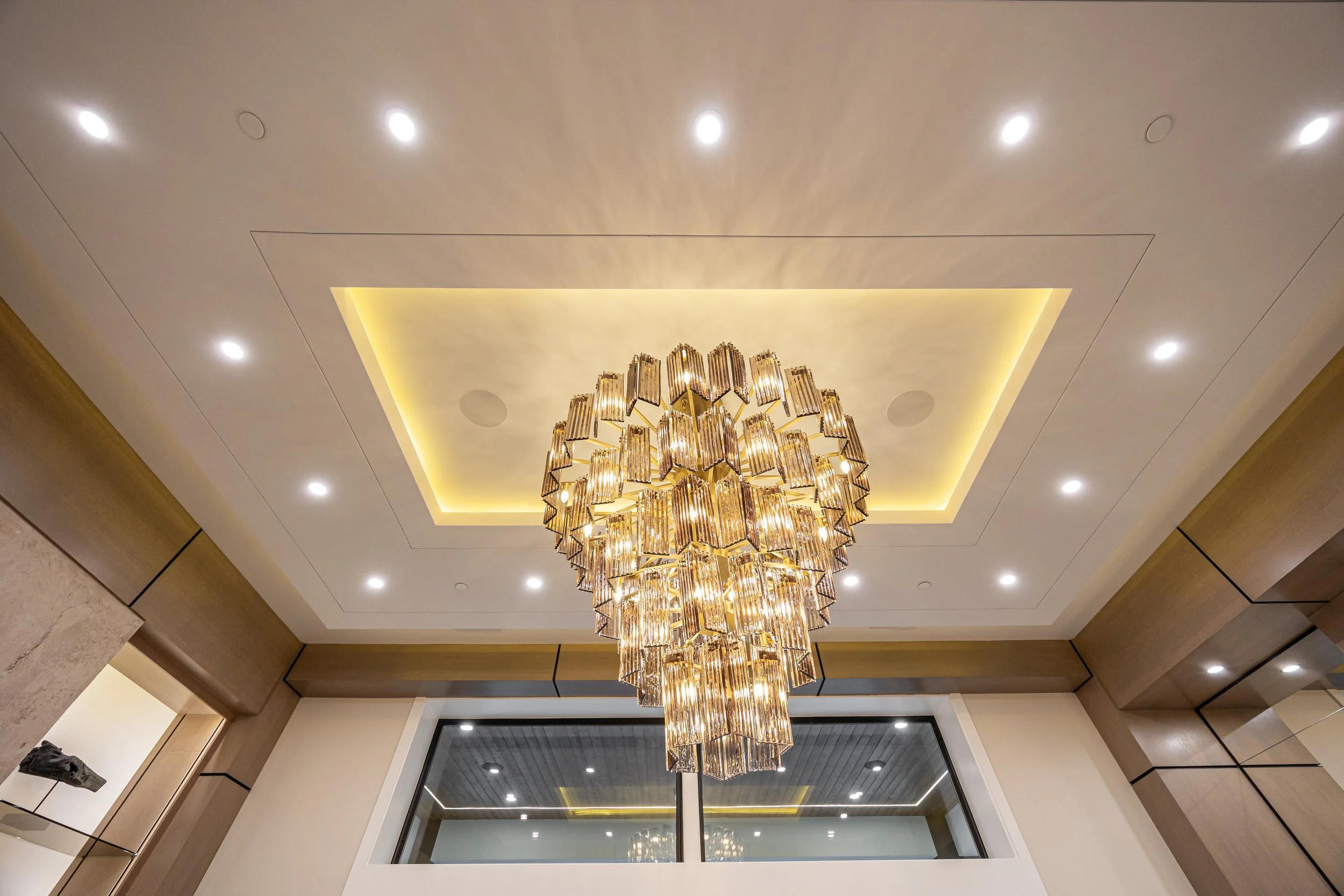
Decorative and recessed lighting share the ceiling composition in Overture. Photography by Beliz Photography.
Make Space for Integrated Light
At Sculpted Elegance in Kennewick, concealed LEDs trace the carved foyer arches, while picture lights bring attention to their textured backdrops. The lighting belongs to the forms themselves. That relationship depends on coordination before the walls are finished.
Backlit shelving, illuminated niches and recessed channels all require space for wiring, drivers and future access. The designer, builder and electrician need to coordinate the intended appearance with the practical requirements of installation. Fixture specifications and electrical requirements should be confirmed with the appropriate trades.
Review the Views Between Rooms
Lighting is experienced across a home, not only within individual rooms. Pendants above an island may be seen alongside a dining fixture and the living-room chandelier. They need a shared sense of proportion without becoming a matching set.
What should draw the eye from the entrance?
How do nearby fixtures relate in scale, shape and finish?
Where will light reveal a surface worth noticing?
Does each fixture align with the furnishings and architecture below it?
These questions help establish a hierarchy, allowing a few elements to hold attention while others support the room.
Consider Materials After Dark
Light changes the appearance of wood, stone and paint. Review samples under the proposed lighting as well as daylight, especially where rooms share an open view. Color temperature, light output and the fixture’s shade or diffuser all affect how a surface is perceived.
Dimming adds flexibility, but compatibility should be checked among the selected fixtures, lamps, drivers and controls. A useful evening setting depends on both the quality of the light and the ability to adjust it.
Select Fixtures as Part of the Interior
Once the room’s needs are understood, decorative selections become more focused. Scale can respond to ceiling height and furniture. Finishes can connect to the material palette. The fixture can contribute character without competing with every other feature.
Strata Interior Design offers lighting reviews and decorative fixture selections for new homes and remodels in Kennewick, Richland and Pasco. Each selection is considered in relation to the architecture, surrounding materials and the way the room will be used.
By Jasmine Wilkinson, founder of Strata Interior Design.